Reclaiming Dignity:
Positional Reversal and a Vegetable Seller’s Nessun Dorma

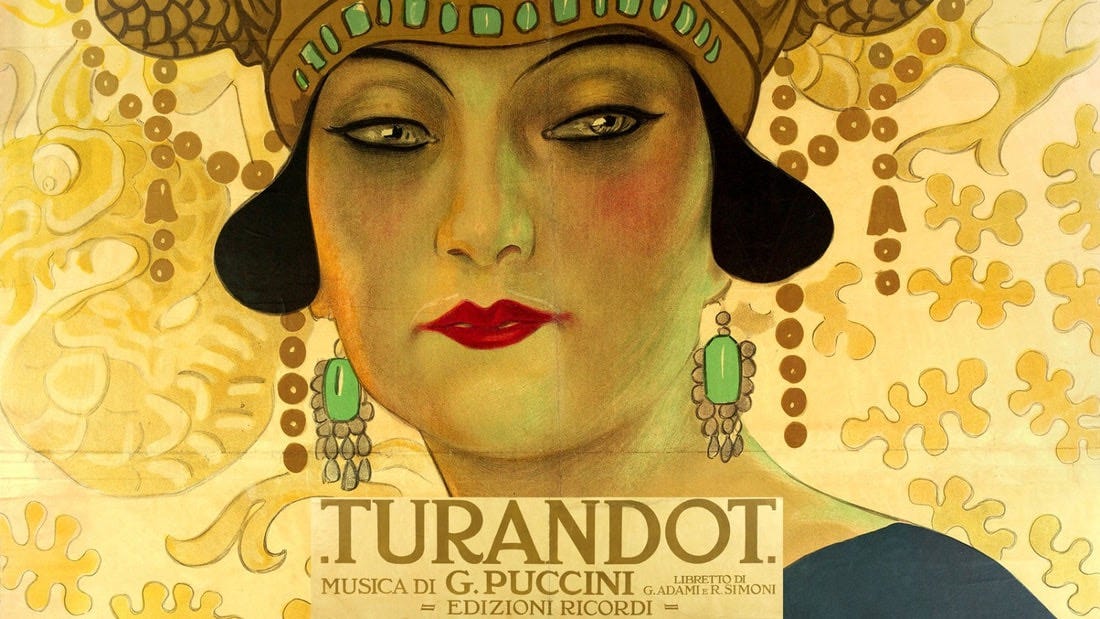
Giacomo Puccini’s Turandot (1926) crystallises the Orientalist imagination analysed by Edward Said: an exotic, cruel China is rendered legible and conquered by the Western hero Calaf, whose climactic aria Nessun Dorma ends with the triumphant cry Vincerò!—a declaration of epistemic and cultural victory (Said 1978).
In 2011, this civilizational script was quietly inverted. Cai Hongping, a 55-year-old vegetable seller from Anhui, performed Nessun Dorma on China’s Got Talent, rewriting the lyrics in Mandarin as a market cry, “Chicken legs, carrots, tomatoes… buy more and get spring onions free!”, while retaining Puccini’s demanding melodic structure. What appears as comic mimicry operates as a deeper philosophical reversal.
Direct Translate of the lyrics:
Chicken leg, chicken wing
Duck leg, duck wing
Carrots, tomatoes and green onions
Shepherd’s purse, parsley, celery, cabbage, pepper
Broccoli, cucumber, snap beans, green beans, olive
Come and buy and you will get green onions
You will get (free) green onions
You will get (free) green onions
Song ni cong, “You will get (free) green onions,” became an Internet meme as Cai’s fame rose. “Her voice and humor are beyond comparison,” TV anchor Yang Lan commented.
“None of my relatives supported me, including my parents and my daughter. They did not believe I could make a success of myself. Even I myself dared not think about dreams, since none of my dreams, even the smallest one, had ever come true,” Cai told the Global Times, adding she had once hoped to go to a music academy but gave it up to support her family, ending up with only a middle-school education.
This is not cultural assimilation but appropriation without deference. As Homi Bhabha suggests, hybridity unsettles authority by repeating dominant forms with difference, exposing their contingency (Bhabha 1994). Cai’s opera is neither parody nor resistance alone; it is a relocation of cultural authority. The “mysterious Orient” dissolves into a living market, while Vincerò becomes irrelevant. No conquest is required when positionality itself has shifted.
Symbolically, this mirrors China’s broader rise. Western culture is no longer othered from the outside but inhabited from within, stripped of its exclusivity and re-embedded in everyday life. Cai’s raw, powerful voice, earning viral acclaim, democratises elite art and affirms dignity without asking permission. The victory is not over the West, but over the assumption that cultural excellence, like geopolitical power, flows in only one direction.
In this inversion, domination gives way to mastery, and mastery to capability. The causal link between civilizational domination and organised othering is broken not by confrontation, but by innocence coupled with opportunity. The aria itself marks this transformation: once an assertion of civilizational absolutism, it becomes a space of shared engagement, inhabited rather than conquered, and opened to competence wherever it appears.
From that shift follows a broader civilizational reordering. Mastery in song and mastery in metallurgy emerge as parallel expressions of the same underlying capacity, demonstrated across symbolic and material domains without appeal to inherited authority. Holding that transformation in mind, periphery and core are recomposed within a shared civilisational field, as hierarchy gives way to demonstrated capacity and sovereignty is revealed through structural ingenuity rather than civilizational rank.
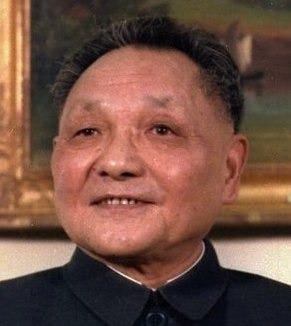
我们应该吸收一切文明的成果,为中国所用。
Wǒmen yīnggāi xīshōu yīqiè wénmíng de chéngguǒ, wéi Zhōngguó suǒ yòng.
“We should absorb the achievements of all civilizations and make them serve China.”
Deng Xiaoping 邓小平, Selected Works of Deng Xiaoping, Vol. 3, 198
Deng Xiaoping’s words from his 1992 Southern Tour:
“Middle East has oil; China has rare earths. China’s rare earth resources account for 80 percent of the world’s known reserves. Their status can be compared to the Middle East’s oil. We must handle rare earth matters properly.” (Jiefang Daily / 上观新闻, 2017; translated by author)
Bibliography
Bhabha, H.K. (1994) The Location of Culture. London: Routledge.
Jiefang Daily / 上观新闻 (2017) 邓小平说“中东有石油,中国有稀土”,美日欧占够了便宜,中国行动了!, 7 August 2017. Available at: https://www.jfdaily.com/wx/detail.do?id=61382 (Accessed: 11 October 2025). Translated by Alan Koch for The Gadfly Doctrine.Puccini, G. (1926) Turandot. Milan: Casa Ricordi.
Said, E.W. (1978) Orientalism. London: Penguin Books.
China’s Got Talent (2011) Performance by Cai Hongping. Shanghai: Dragon Television.
Magical.